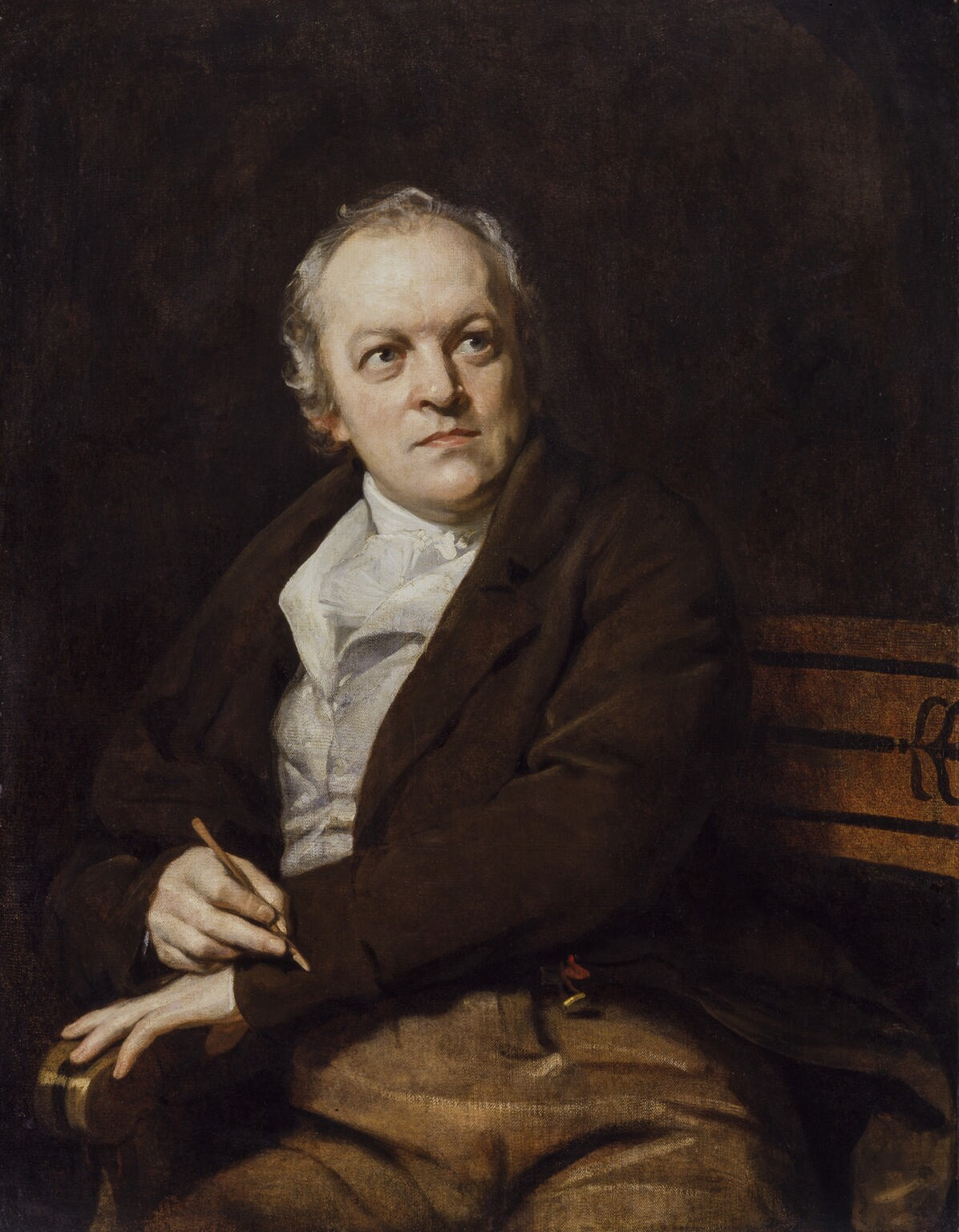
Barry Gucciardi Sr.
Professor Emeritus,
University of Wisconsin-Superior
—
In the beginning,
there was only talk. Dr. Hinden and I first heard rumors that Dogs in Ecstasy
were working on a full-length as early as November 2014, but details were
scant. An Instagram video
of an animated parrot in a pirate’s outfit alluded to a sick guitar solo, but
beyond that, as with most things, Hinden and I were in the dark.
“Yeah, I got a theory: I think they're
holed up in that studio beneath the Guitar Center, doing the whole thing real
slow and professional-like.”
“Well you know that perverse succulent
they drag on to stage night after night? I heard that thing’s an amplified
cactus—used to be owned by
Johnny Cage!”
Things went on like this for an entire
year: winter turned into spring, spring into summer, summer into Indian summer.
All of a sudden we were balls deep into September and still with no Dogs
record. It was about then that Hinden passed me a sheet of paper with a
password to a classified Soundcloud page, one that allegedly contained a rough
cut of the album.
“Hinden,
is this bullshit?” I said.
“Just
listen to it,” he said, a wistful twinkle in his eye. Hinden was for real.
“It’s that good, eh?”
“No,” said Hinden. A single tear
rolled down his wind-beaten, Scandinavian face. “It’s better than I could’ve
ever imagined.”
—
I
wish I could tell you that I held off on listening to Welcome 2 Hell until it dropped. At the time however, I just didn't
have the patience. The looming Midwestern winter had rendered the garage rock
of the past summer completely unlistenable, and as I navigated the withdrawal,
I could sense my expectations for the Dogs record rising higher and higher—so
high that by September, I was actually bracing for a letdown. You see, by then
Dogs had ceased to be “My Favorite Band in Wisconsin”; they had joined the
ranks of “My Favorite Bands,” a very short-list of mostly major label groups
who walk the tightrope of Greatness above a canyon of my deep and abiding
disappointment. I’ll be the first to admit that this is not a sustainable or
fair model of fandom. I can understand why The Ramones became estranged and why
the Pixies keep playing without Kim Deal and why Weezer releases albums like Hurley; it’s more that I have trouble accepting and coping with
these things. My faith in DIE was predicated on the strength of two EPs and a
handful of live shows, but as I typed the password into the secret Soundcloud
page, only one question weighed heavily on my mind: will the Dogs deliver?
—
Given
that our culture has only recently emerged from the Season of Year-End lists, I
do not wish to subject anyone to an extended essay as to why Welcome 2 Hell is my favorite record of
2015. Hegel cautions against this kind of overly personal generalization,
acknowledging the "absolut[ley] inward” and “infinitely subjec[tive]"
experience of the Sublime. For as abundant as Year-End lists are, they
tend to say much more about the compiler than what’s being compiled, which is
cool—that’s why they’re made—but what I’m trying to do here is establish the objective
canonical Greatness of Welcome 2 Hell. Though the Critical Est.
is quick to throw Dogs a bone for their wryness and collective pop sensibility,
Welcome 2 Hell deserves much more
respect. There is, as Dr. Hinden eloquently puts it: "a rigorous
methodology to their MIDI-Grunge insanity,” one that, after listening to the record over 300 times, I reckon I
may only be beginning to parse out. As I see it, my analysis may never end, but
for now I can say this: Dogs in Ecstasy are a Great band. By Great, I don’t
just mean really, really good. I mean Welcome
2 Hell is a capital-G Great record, as in written in dialogue with the Great Masters. Who are these Masters?
I suspect the band has many muses, but for now let’s just focus on two: David Byrne
and John Milton.
Here’s the thesis: Welcome 2 Hell juxtaposes
Miltonic Satanism with Byrnian Eschatology in order to erratically stage an
allegory expressing generalized anxiety over the ontological status of the
contemporary rock singer.
In order to situate the underworld as a
backdrop for their allegory, Dogs must first vault the most basic imaginative
hurdle part and parcel with any depiction of the afterlife: heaven and hell
work much better as abstract theological constructs than dynamic literary
environments. It can be difficult to make eternal suffering believable. Say for
instance I were to die right now and go to hell. Where would I go? What would
the devil do with me? In such a case, I guess I can only hope that he’d put me
to the worst use possible. Maybe I’d be made to write a 3 million page essay
about Godsmack.
That would suck, but it would be nothing compared to Hell’s next circle:
spinning on Satan’s
turntable, sitting in his soul collection, being taken out just once every 5000
years to one-up other demons at sparsely attended DJ nights in Hell: “Ooo, what
are you playing?” asks Moloch, vibing pitifully. “This is funky.
I compare sparsely attended DJ
nights to hell only to bring up the point that we can only describe the
underworld in figurative terms. It’s not like anyone’s ever been there and
back, so we use our imaginations or the shitty things we’ve experienced on Earth
to conceptualize it—you know, stuff like being on fire or getting strapped to a
torture wheel.
Obviously, this referential limitation also extends the other way, to heaven,
which brings us, conveniently, to the Talking Heads. On Fear of Music’s “Heaven,” David Byrne envisions paradise as a
bar—an almost global symbol of democracy and fun—but an idea that Byrne
repurposes into a metaphor for stasis: “Heaven is a place where nothing ever
happens.” Within the context of The Talking Heads, “Heaven” encapsulates
what New Yorker critic James Verini
identifies as Byrne’s “suspicion that the band had been born too late; that
rock and life had run their course.” If this sounds familiar, it’s because Dogs
in Ecstasy centralize this Byrnian conceit in the staging of their own allegory
on Welcome 2 Hell, for if heaven
(read: being in a rock band) is tantamount to nothing more than a never-ending
series of celebrations, it’s easy to see how going to hell may come to represent a viable alternative to going out: “You call this a party? I’d rather be in hell.”
Dogs in Ecstasy channel their
resistance to heaven through the figure of the Sound Guy, a character
introduced on the second track and whose perspective re-emerges periodically
throughout the record. Any discussion of the Sound Guy requires at least a brief overview of Milton’s Satan,
the archetype from which Dogs derive this protagonist. When Milton published Paradise Lost in 1667, he did so with the intention of enmeshing the literary conventions
of the Greek epic with theodicy—writing which attempts to reconcile the
existence of evil in the world with the concept of an omnibenevolent God. With
regard to this ambition, many critics, most notably William Blake,
consider Paradise Lost to be more of
an Epic Fail than a Theodical Epic; Milton’s Satan is much more intelligible
and dynamic than Milton’s God. People tend to relate more to the devil. Book I
begins in medias res with Satan lying face down in a lake of fire after being
thrown out of heaven. As Satan gets up and begins to wonder what the fuck
happened, a demon marks the change in his formerly angelic friend’s appearance:
“If thou beest he; But oh how fallen!” (I, 84) To most, the sheer extent and
irreversibility of Satan’s loss outweighs the sin of hubris that condemned him;
God’s punishment does not fit Satan’s crime. More to the point, if Paradise Lost is supposed to prove God
to be all-powerful, all-seeing and all-good, God’s failure to prevent Satan’s
rebellion throws a bit of a wrench in things. Satan comes across as tragic and
heroic, possessing all the resilience and defiance of an Odysseus—never quite
accepting his fate—but also acutely cognizant of the fact that he is fucked,
permanently doomed and will never escape his villainy.
As Paradise
Lost compels us to sympathize with the devil, Dogs in Ecstasy elicit
“Sympathy for the Sound Guy.” In the backdrop of a work entitled Welcome 2 Hell, I imagine that the
significance of this titular substitution is not lost on anyone—to say nothing
of the song’s first words which describe the Sound Guy as being “born with a tail.”
Perhaps less obvious however is the stark contrast between the allegorical
satanism of “Sympathy for the Sound Guy” and the literal satanism of the
Rolling Stones’ “Sympathy for the Devil.” Unlike the Sound Guy, Jagger’s Satan is a static menace;
he coerces our compassion (“Have some sympathy, and some taste [...]/Or I'll
lay your soul to waste”). The point of “Sympathy for the Devil” is of course
not to actually express sympathy for the devil; it’s to have Mick Jagger adopt
the perspective of Satan because that is transgressive and cool. To be clear,
the Sound Guy is also transgressive and cool: he wears crocs
and steals souls (notably those of Bruce
Springsteen, Bob
Dylan and The Band),
but on Welcome 2 Hell, these Satanic
tendencies serve an entirely different master, functioning instead to inform
the allegorical opposition between the inglorious Sound Guy and the glorified
Rock Star—a dichotomy which Dogs demonstrate to be false. By giving the Sound
Guy the mic, Welcome 2 Hell in effect
transforms him into the Rock Singer, a dramatic transfiguration triumphantly
conveyed by the song’s solo. That being said, while the band pities and
empowers the Sound Guy, indeed frames the nobility and heroism of his repressed
musical ambitions against the egoism of the Rock Singer, I suspect what Dogs
really intend here is to blow up the entire Sound Guy-Singer paradigm—to
extricate the Sound Guy, the Rock Singer and themselves from the “prison of dreams.”
Where is the prison of dreams? Well,
you can find it at the crossroads of rock ‘n’ roll ‘n’ reality, and if you
venture inside, there will be someone waiting for you: Phil Spector,
the producer whose ‘Wall of Sound’
recordings galvanized pop music in the 1960s and whose murder conviction
in 2003 reduced his entire life into a cautionary tale. My wager is that "Do Me Ronnie"
is written from the perspective of Spector. First and foremost: Spector named
his wife Ronnie
(of the Ronettes, née Veronica Bennett). Secondly, the paranoia conveyed is
classic Spector, whose hang-ups are very well-documented (e.g. Spector would
make Ronnie (Veronica) drive around with a dummy dressed to look like him
whenever she left the house. Also, once he made a taxiing airplane return to
the gate because he was “wigged out” by the way water droplets were flowing
upwards on the windows.). Third, a reference to Spector would also do much
thematically to connect "Ronnie" to “Soundguy." Spector was not
a rock singer. He was more than that—a megalomaniac who "turned the
knobs" and lived as a “god in this land." In a 1964 profile,
Tom Wolfe describes the then 21-year-old as “an electronic maestro, tuning
instruments up, down, out, every which way, using things like two pianos, a
harpsichord and three guitars in one record” (Wolfe, 68). Last but not least,
there’s the minor but not insignificant point that Spector insisted on being
driven everywhere in—get this—the back of
a cadillac limo.
In light of these considerations, even if it is a stretch to say Spector is the
Sound Guy on Welcome 2 Hell, perhaps
it is still possible to give him the same sympathy we give the Sound Guy and
Milton’s Satan. When I think of Spector, I don’t think of the five-foot-three
homicidal maniac wearing heeled Italian boots and a five thousand dollar suit,
I see an old man asleep on a prison bed dreaming of music that he will never
again make. Spector will be eligible for parole in 2028. At 76, he will likely
never see that day. Dat Cruel God had different plans.
—
EPILOGUE
Over
the New Year’s holiday, Hinden and I decided to take a trip to Milwaukee to see
Dogs in Ecstasy play a 5 a.m. show at a small dive bar in the funky
neighborhood of Riverwest. As we moshed and did shots with all the beautiful
young artists, Hinden whispered to me that he couldn’t help but recall that old
Nietzschean adage: “In heaven, all the interesting people are missing.” Watching the band, it occurred to me then that
though damnation may be Dogs in Ecstasy’s foregone conclusion, their hell is
not a place devoid of redemptive qualities. I relayed this thought to Hinden
the next morning on the drive back up to Superior and even though we were both
hungover as shit and could barely see, we both agreed that 2016 was bound to be
one hell of a year.